|
Lecture 2: Landmarks in the Discovery of Geologic Time
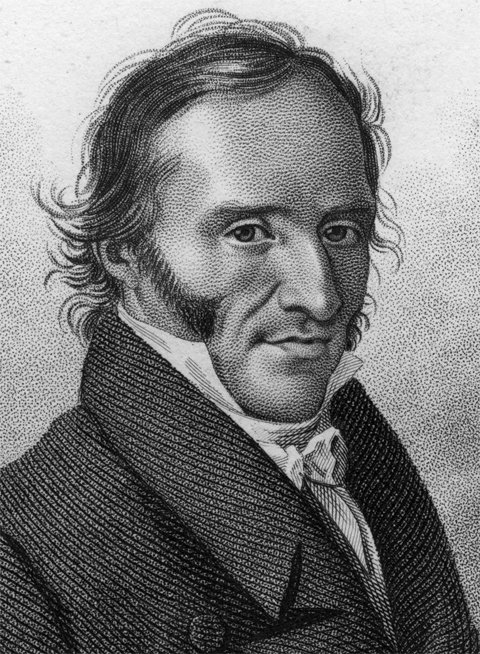
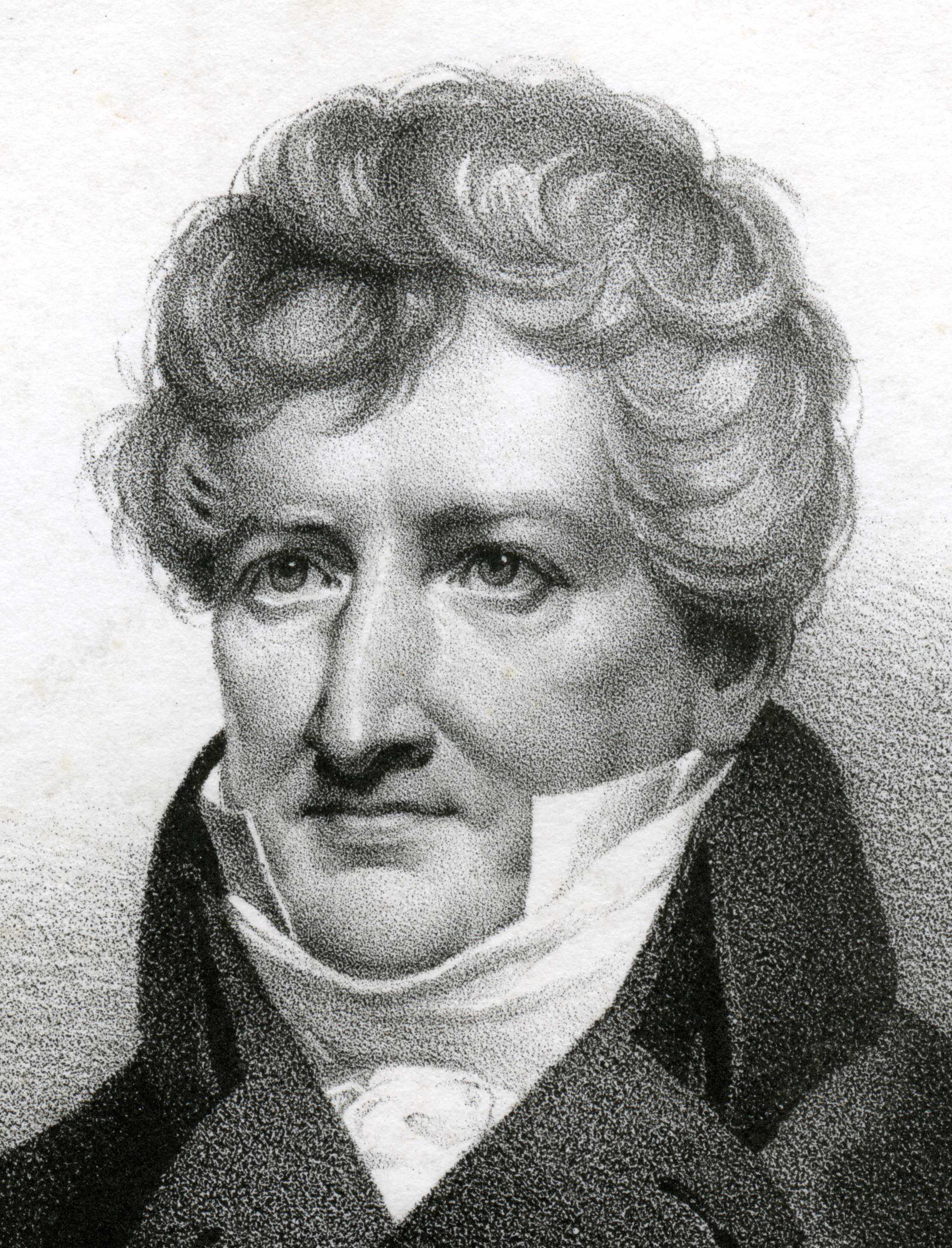
September 4, 2007 Nicholas Copernicus (1473-1543): principle of heliocentric planetary motion. James Ussher, Bishop of Armagh (1581-1656): calculated biblical Creation of Earth to have been in 4004 B.C. Nicholas Steno (1638-1686): Prodromus (1668, his treatise on geology); principle of original horizontality of sedimentary rocks, and the principle of superposition; argued that fossils were once living beings. Isaac Newton (1642-1727): modern theory of planetary motion; theory of gravitation. James Hutton (1726-1797): Theory of the Earth (178, published as a paper); Theory of the Earth with Proofs & Illustrations (1795, a two-volume book); proposed the Rock Cycle Georges Cuvier (1769-1832): founded comparative anatomy and paleontology; demonstrated the fact of organic extinction (1796). imagery: etching of Cuvier; lithograph of Cuvier. William Smith (1769-1839); used fossils for correlation and demonstrated principle of faunal succession; developed first stratigraphic classification based on time relations of strata; produced first geological map (1815).` Charles Lyell (1797-1875): Principles of Geology (three volumes, published 1830-1833); established the doctrine of uniformitarianism. Charles Darwin (1809-1882): theory of evolution; voyage of the Beagle 1831-1836; published Origin of Species (1859). Henri Becquerel (1852-1908): discovered natural radioactivity (1896). Pierre (1859-1906) and Marie (1867-1934) Curie: discovered that radium continuously releases newly generated heat. Arthur Holmes: first used radioactivity as a means of dating rocks (1911). links: Berkeley Time Machine http://www.ucmp.berkeley.edu/help/timeform.html US Geological Survey Time http://pubs.usgs.gov/gip/geotime/contents.html
|